欧洲杯投注地址_明升体育-竞彩足球比分推荐

图片

STEM and Medicine

Research projects related to sustainability in the field of STEM and medicine
This page has been machine translated.

Main research areas and topics

Slideshow controls Slide 1 of 4
Slide 1 of 4

Some project highlights briefly presented

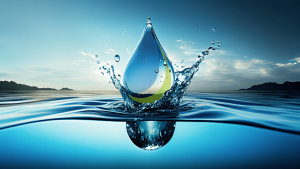
Drop of water on a lake

Image: Adobe Stock

Thuringian Water Innovation Cluster (ThWIC)

The ThWIC future cluster focusses on technological and social innovations that enable a sustainable, safe and affordable water supply. The aim is to develop solutions for the sustainable use of water. The transfer of innovative technologies into socially relevant applications (e.g. for analysing and purifying water or for data-supported prediction of water quantity and quality) is just as much at the centre of ThWIC as the development of social innovations (e.g. for water assessment or the fair distribution of access to resources).

ThWIC is coordinated by the University of Jena and brings together 28 project partners. These include research groups from the fields of natural and engineering water research, data science and Sociology as well as industrial partners, associations and civil society actors.

Spokesperson: Prof Dr Michael Stelter, Institute of Technical and Environmental Chemistry
Funded by the Federal Ministry of Education and Research (BMBF)

More information: www.thwic.uni-jena.de

iDiv Fieldwork Bad Lauchstaedt

Image: iDiv

German Centre for Integrative Biodiversity Research (iDiv) Halle-Jena-Leipzig

The iDiv was founded in 2012 and is dedicated to researching biodiversity and its importance for ecosystems and human society. The aim is to deepen our understanding of the loss of biodiversity, its causes and consequences, and to develop strategies for the protection and sustainable use of nature.

iDiv acts as an interdisciplinary platform that brings together scientists from different departments to conduct holistic research into the complex nature of biodiversity. By combining basic research with applied perspectives, iDiv strives to provide evidence-based recommendations for policy and society, thus contributing to the conservation of biodiversity and the safeguarding of natural livelihoods.

iDiv is a consortium of three universities and eight non-university facility|institution|(structural) units. Within the University of Jena, the Faculty of Biological Sciences and the Institute of Ecology and Evolution are primarily involved in iDiv's work. Researchers from the Faculty of Chemistry and Earth Sciences are also involved in the iDiv's work.

Spokesperson (at the University of Jena): Prof Dr Ulrich Brose, Institute of Ecology and Evolution
Funded by the German Research Foundation (DFG)

More information: www.idiv.deExternal link

AquaDiva: Groundwater sampling in the Hainich Critical Zone Exploratory.

Image: Johann Karl

Collaborative research centre SFB 1076 AquaDiva

AquaDiva is dedicated to researching the interactions between the Earth's surface and the hidden life underground. The aim is to gain an in-depth understanding of the dynamics between biological diversity below the Earth's surface, the water balance and geochemical processes.

AquaDiva places particular emphasis on deciphering the role of microbial communities and their influence on water quality and material cycles in soil and groundwater. By integrating various scientific disciplines such as microbiology, hydrology, geochemistry and ecology, the CRC offers innovative approaches for overcoming ecological challenges and thus contributes to the protection of water as a vital resource. AquaDiva is thus a central project for understanding the biological and chemical foundations of our environment.

AquaDiva has been based at the University of Jena since 2013. Also involved are: Helmholtz-Centre for Environmental Research (UFZ), Leibniz Institute of Photonic Technology (IPHT), Max Planck Institute for Biogeochemistry (MPI-BGC).

Spokespersons: Prof. Dr Kirsten Küsel, Institute of Biodiversity, Ecology and Evolution, Prof. Dr Kai Uwe Totsche, Institute of Geosciences, Prof. Dr Susan Trumbore, Max Planck Institute for Biogeochemistry
funded by the German Research Foundation

More information: www.aquadiva.uni-jena.de/

In the Laser lab

Image: Jan-Peter Kasper (University of Jena)

Collaborative research centres TRR 234 CataLight

CataLight is concerned with the development of innovative solutions for the utilisation of light to activate chemical processes, inspired by natural photosynthesis. The aim is to explore new ways of efficiently converting light energy into chemical energy in order to develop sustainable energy sources and environmentally friendly chemical synthesis processes.

Through interdisciplinary collaboration between researchers from the fields of Chemistry, Physics and Materials Science, CataLight strives to understand the mechanisms of light catalysis and to create efficient light-activated catalysts. This should contribute to reducing the carbon footprint and open up new perspectives for green technologies.

CataLight was facility|institution|(structural) unit in 2018 as a Transregional Collaborative Research Centre of the Universities of Jena and Ulm. Also involved are: University of Mainz, University of Vienna, Leibniz Institute of Photonic Technology, Max Planck Institute for Polymer Research.

Spokesperson: Prof. Dr Felix H. Schacher, Faculty of Chemistry and Earth Sciences
funded by the German Research Foundation (DFG)

Further information: www.catalight.uni-jena.de/

Collaborative research centre SFB 1127 Chemical mediators in complex biosystems (ChemBioSys)

ChemBioSys focusses on chemical communication processes in ecological systems. The main goal is to understand how chemical signals control coexistence and interactions between organisms.

By studying chemical diversity and bioactive compounds in natural habitats, ChemBioSys strives to gain fundamental insights into the biological complexity and dynamics of ecosystems. This knowledge should enable new approaches for environmental protection and the sustainable use of biological resources.

ChemBioSys was facility|institution|(structural) unit at the University of Jena in 2014. The universities of Leipzig and Potsdam as well as the Leibniz Institute for Natural Product Research and Infection Biology, the Hans Kn?ll Institute and the Max Planck Institute for Chemical Ecology are also involved.

Spokespersons: Prof. Dr Christian Hertweck, Faculty of Biological Sciences, Prof. Dr Georg Pohnert, Faculty of Chemistry and Earth Sciences
funded by the German Research Foundation (DFG)

Further information: www.chembiosys.de/en/welcomeExternal link

Further current projects (selection)

  • CILCat

    ?de

    Interfaces of nanoscale carbons and ionic liquids for the catalytic activation of nitrogen Coordination: Prof. Dr Martin Oschatz, Institute of Technical and Environmental Chemistry Project duration: January 2022 - September 2027

    EU - ERC Starting Grant
  • EVIDENT

    ?de

    Erosion of bentonite under in-situ conditions by the action of natural waters in deep geological repositories Coordination: Prof. Dr Thorsten Sch?fer, Institute of Geosciences Project duration: June 2023 - May 2026

    Covenant
  • ForBioMon - BiodivMon

    ?de

    Improvement of European forest biodiversity monitoring through intelligent combination of existing data Coordination: apl. Prof. Dr Markus Bernhardt-R?mermann, Institute of Ecology and Evolution Project duration: April 2024 - March 2027

    Covenant
  • FutureBAT

    External link?de

    Future storage systems for the energy transition: Polymer-based redox-flow batteries Coordination: Prof. Dr Ulrich S. Schubert, Institute of Organic Chemistry and Macromolecular Chemistry Project duration: January 2023 - December 2027

    EU - ERC Advanced Grant
  • LignUp

    ?de

    Upgrading of lignin for fair raw materials Coordination: Prof. Dr Martin Oschatz, Institute of Technical and Environmental Chemistry Project duration: October 2024 - September 2030

    Carl Zeiss Foundation
  • NFDI4Microbiota

    External link?de

    National research data infrastructure for microbiota research At the University of Jena as a partner: Prof Dr Manuela Marz, Institute of Computer Science Project duration: October 2021 - September 2026

    DFG
  • OptiCool

    ?de

    Resource-saving additive manufacturing of high-performance optics with efficient cooling (part)Project management: Prof. Dr Stefan Nolte, Institute of Applied Physics Project duration: July 2024 - June 2027

    Free State of Thuringia, ERDF programme
  • Py-Pho-Hybrid-Energy

    External link?de

    Pyroelectric Enhanced Photocatalytic Hybrid-Energy-Membranes Coordination: Dr Sebastian Engel, Institute of Technical and Environmental Chemistry Project duration: February 2024 - January 2030

    Covenant
  • QuiCCoDAC

    Quinone/carbon hybrid material architectures for energy efficient and sustainable electrochemical direct air capture of carbon dioxide

    Coordination: Dr Tilmann Neubert, Institute of Technical and Environmental Chemistry

    Project duration: January 2026 - December 2030

    Carl Zeiss Foundation
  • ReAlBatt

    External link?de

    Design of carbon-derived electrode materials towards rechargeable Al-N2 batteries Coordination: Dr Desirée Leistenschneider, Institute of Technical and Environmental Chemistry Project duration: January 2024 - December 2028

    Carl Zeiss Foundation
  • SolSTEP

    ?de

    Two-step photocatalysts for the integrated production of solar energy carriers Coordination: Dr Jacob Schneidewind, Center for Energy and Environmental Chemistry Project duration: January 2024 - December 2029

    Covenant
  • ThüLeNa

    ?de

    Thuringia teaches and learns sustainably Coordination at the University of Jena: Maria Fronz, Green Office Project duration: April 2024 - December 2027

    Carl Zeiss Foundation
  • WaNaWa

    ?de

    Hydrogen storage in nanowater Coordination: Prof. Dr Martin Oschatz, Institute of Technical and Environmental Chemistry Project duration: March 2024 - February 2027

    Covenant
  • WASA - WaRisCo joint project

    Risks and resilience of hydrological extremes in urban-rural areas in Southern Africa - Co-production of water and climate services for adapted and sustainable risk management, Subproject 1: HydroCo - Hydrological projections and co-production of water and climate services Coordination: Dr Sophie Biskop, Institute of Geography Project duration: May 2024 - April 2028

    Covenant
Information

Do you have any additions? Would you like your research project to be mentioned here? We look forward to hearing from you at nachhaltigkeit@uni-jena.de!

More information on research at the University of Jena